

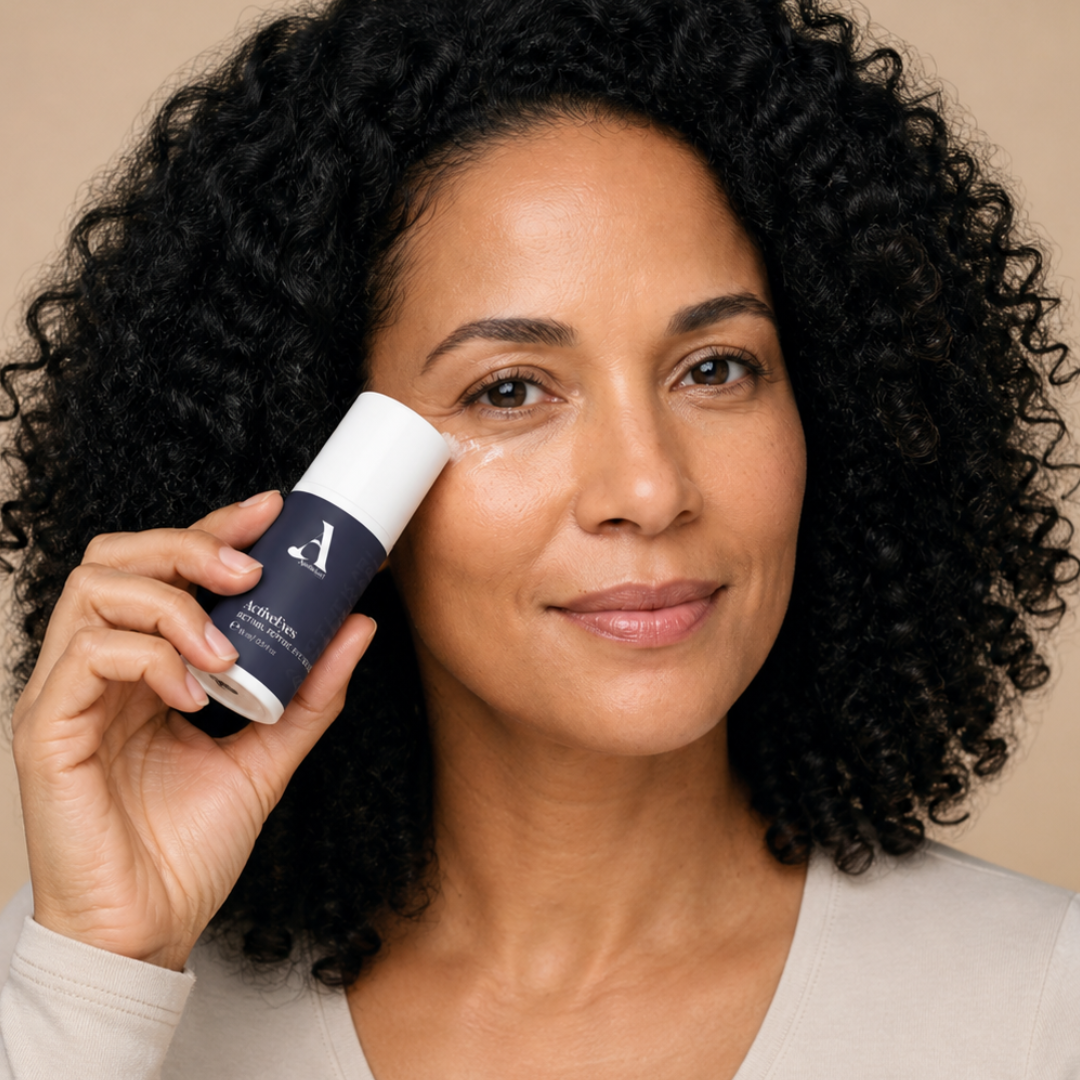
A product you’ve used for years suddenly causes redness. A cleanser that felt fine last month stings now. Skin that was never particularly sensitive starts reacting to things it used to handle without issue.
The instinct is to label it: “I must have developed sensitive skin.” That framing is understandable — but it’s also imprecise, and it often leads to the wrong response. Because what most women are experiencing isn’t a skin type change. It’s a barrier change.
What the Skin Barrier Actually Does
The skin barrier is the outermost layer of the skin — a complex structure of cells and lipids that performs two essential functions: keeping moisture inside the skin, and keeping irritants, bacteria, and environmental stressors out.
When the barrier is intact and functioning well, your skin can process a wide range of inputs without reacting. Products absorb properly. Environmental exposure doesn’t cause immediate reactivity. Skin recovers quickly from stress.
When the barrier is compromised, that changes. Even familiar, previously tolerated products can cause a response. Environmental factors that used to go unnoticed — hard water, temperature changes, certain fabrics — start triggering reactions. Skin feels like it’s constantly on edge, because in a sense, it is. It’s trying to do its job with tools that have been weakened.
Why Estrogen Is at the Centre of This
The skin barrier is directly supported by estrogen. Specifically, estrogen promotes the production of ceramides — the lipid molecules that act as the ‘mortar’ between skin cells, holding the barrier together and keeping it functional.
As estrogen levels fluctuate and decline through perimenopause, ceramide production decreases. The barrier becomes:
Thinner and less lipid-rich, with less structural integrity
Less able to retain moisture, leading to increased dryness and tightness
Slower to recover from stress, irritation, or environmental exposure
More permeable — meaning irritants get in more easily, and moisture escapes more readily
This is why products that felt completely fine at 35 can cause reactions at 42. The products haven’t changed. The barrier processing them has — and what it used to manage without effort now requires more than it can give.
Why the ‘Sensitive Skin’ Label Leads to the Wrong Response
When women identify their new reactivity as ‘having sensitive skin,’ the typical response is to switch to gentler, fragrance-free products — which can help — but also to add more: calming serums, barrier creams, redness treatments, targeted products for each new symptom.
Here’s the problem: a compromised barrier needs fewer inputs, not more. Every additional product introduces another set of ingredients for the barrier to process. More products mean more potential points of irritation, more competing formulas, and more sustained stress on skin that’s already struggling to cope.
The instinct to ‘fix’ sensitivity by adding more often prolongs it. What the barrier actually needs is a chance to reduce its load and focus on repair.
This distinction matters more than most skincare conversati
Sensitive Skin at 40 Is Not the Same as Sensitive Skin at 25ons acknowledge.
Sensitive skin at 25 is typically constitutional — a genetic skin type characterized by a baseline tendency toward reactivity that’s been present since childhood or early adulthood. It tends to respond well to fragrance-free, minimal formulas, and it’s a relatively stable characteristic.
Sensitive skin at 40 and beyond is typically acquired — a consequence of hormonal change that has thinned and destabilised the barrier over time. It’s not a fixed characteristic. It’s a condition that can improve with the right support.
Treating acquired barrier sensitivity the same way as constitutional sensitive skin is one of the most common reasons women feel like nothing is helping. The cause is different. The solution is different.
Acquired barrier sensitivity responds best to ingredients that actively support barrier repair and rebuilding: ceramides and other barrier-supportive lipids, gentle but effective hydration, niacinamide to strengthen barrier function over time, and a routine simple enough to reduce the overall processing demand on skin that’s recovering. The goal isn’t just to avoid irritants. It’s to rebuild what hormonal change has weakened.
What to Do When Your Skin Starts Reacting
If you’ve noticed new reactivity that wasn’t there before, the most effective first response is usually counterintuitive: simplify rather than add.
Strip the routine back to the essentials — a gentle cleanser, a barrier-supportive moisturiser, and SPF
Hold that simplified routine consistently for two to four weeks before reintroducing anything else
When you do reintroduce products, do it one at a time with at least a week between additions, so you can identify what’s contributing to any reaction
Prioritise barrier-supportive ingredients before layering in active treatments
Give the process time — barrier repair happens gradually, not overnight
The temptation when skin is reactive is to troubleshoot aggressively. The skin responds better to patience and simplicity.


