

Blog
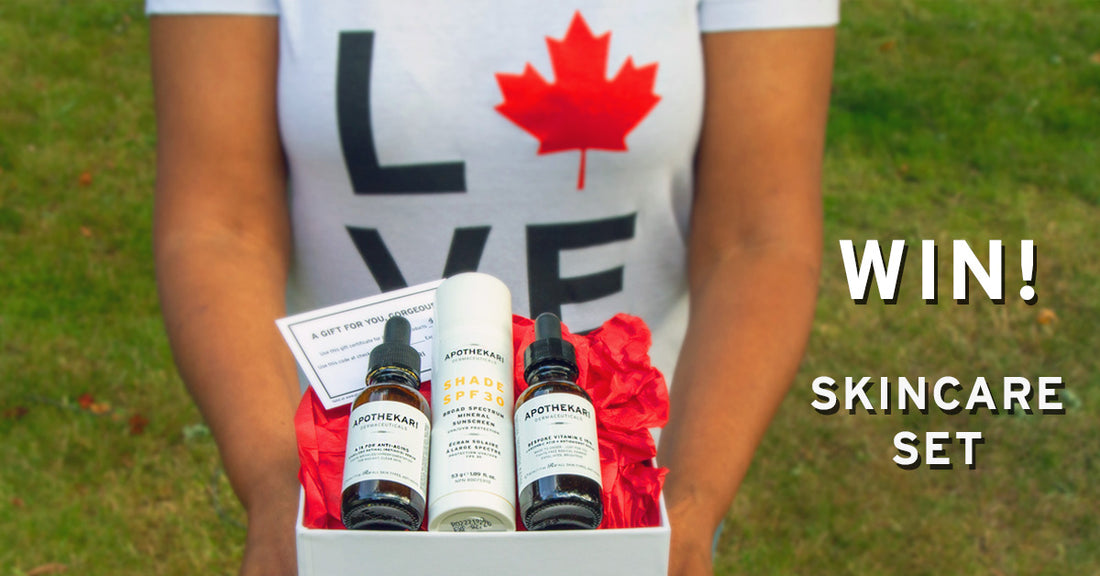
Canada Day Contest - Win! Apothekari Skincare Set
CANADA DAY CONTEST Win! Apothekari Skincare Set As a proud Canadian company (Vancouver based), we are getting into the spirit of Canada Day by celebrating with a contest! Enter for a chance to win an Apothekari skincare set on Facebook and/or Instagram*. ***This contest is now closed! Thank you all for entering and for your great comments! Congratulations to Adela Patoni, the winner of our contest!*** Prize: One lucky winner will receive an Apothekari Anti-Aging Skincare Set (Value $255) filled with essentials for healthy & beautiful skin. Learn how these products can help beat sun damage this summer. This set includes: Shade SPF 30 Sunscreen: Mineral based, non-whitening & broad spectrum sun protection A is for Anti-Aging Serum: Minimize wrinkles, brighten skin & defend against sun damage Bespoke Vitamin C Serum: Protect against free radicals, brighten skin & exfoliate $40 Gift Certificate to apply to a future Apothekari purchase. How To Enter: Our Canada Day Contest is an online contest and you can enter through Facebook and/or Instagram*. Increase your chances of winning by entering in both methods; however, only one entry is allowed for each method. Facebook Entry: Go to the Canada Day Contest post on the Apothekari Facebook page timeline. Complete 2 steps to qualify as one valid entry: LOVE the contest post, and COMMENT by telling us why you love Canada and who you will celebrate with. Instagram Entry: Go to the Canada Day Contest post on the Apothekari Instagram Feed. Complete 3 steps to qualify as one valid entry: FOLLOW us @apothekariskin, and LOVE the post COMMENT by telling us what you love about Canada and tag 3 friends. Bonus Entry: Subscribe to our newsletter at the bottom of this page for a bonus entry. This information will not be shared with any other party outside of Apothekari. Canada Day Contest Conditions: This contest is run by Apothekari Skincare (Harmani Enterprises Ltd.) Contest closes July 3, 2019 (noon, PST) No purchase necessary to enter. Maximum one entry per person per social media platform. Bonus entry for subscribing to newsletter. Participants must be 19+ and a resident of Metro Vancouver to qualify for the prize and free delivery. One (1) winner will be selected in a random draw from among all eligible entries received via all entry methods and contacted by Facebook Messenger, Instagram Direct Message or email. The winner’s full name is required before being awarded the prize. Once contacted, the winner will have 24 hours to reply and accept the prize. If the winner does not meet the contest conditions, then there will be a redraw. The winner will be announced on the Canada Day Contest Post on Apothekari Skincare’s Facebook page and Instagram account once the prize has been accepted. Prize must be accepted as awarded. No substitutions. Not redeemable for cash equivalent. The winner’s home address is required for the delivery of the prize. The value of the prize is based on the retail value of the products. The prize package is valued at $255 and contains the items in our Anti-Aging Set, outlined above. If you wish to purchase the Anti-Aging Set, visit our online store at PhaMix.com. *This contest is in no way sponsored, endorsed or administered by, or associated with Facebook or Instagram. By entering, entrants release Instagram and Facebook of responsibility, and agree to Instagram’s and Facebook’s terms of use. Apothekari Clean Skincare Formulations You’re concerned about what you put on your skin and we are too. Our clean skincare formulations are made with naturally safe ingredients that are also free from: Aluminum Baking Soda Silicone Parabens Phthalates Formaldehyde Synthetic Colourants Synthetic Fragrances SLS (Sodium Lauryl Sulfate) and SLES (Sodium Laureth Sulfate) And, Apothekari Skincare products are never tested on animals. Except the human kind, of course! Apothekari Skincare products are registered with Health Canada. Learn more about our philosophy here… Photo credit: Yasmeen Strang Photography
Learn more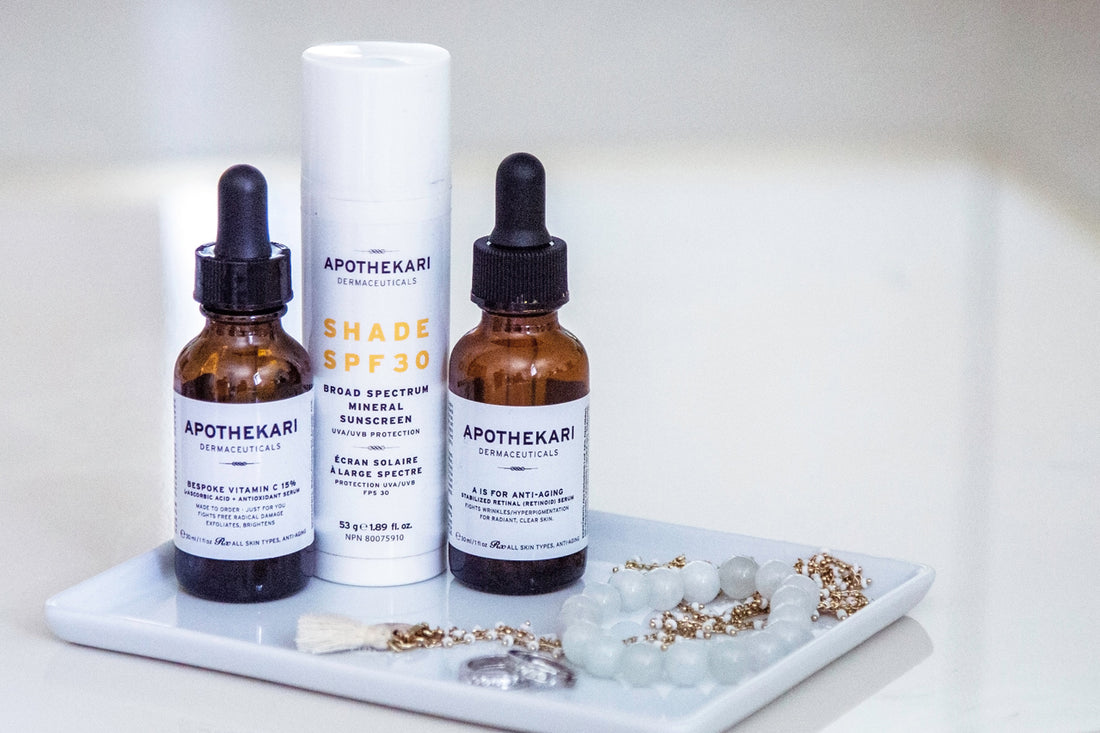
All Skin Needs These 3 Anti-Aging Products
All skin benefits from 3 anti-aging products in order to keep it looking its very best – a sunscreen, an antioxidant treatment and a retinoid. In this post, we’re diving into why these products are so important if you’re interested in maintaining healthy and beautiful skin. (This set has been discontinued. Consider our Ageless skin set instead) Shop Apothekari Ageless Skin Set Here’s How Your Skin Ages Skin ages in two main ways – extrinsically and intrinsically – discussed in detail in an earlier post. Extrinsic aging occurs as result of things happening outside our bodies – UV rays, pollution, smoking & smoke exposure as well as diet and lifestyle. These factors are the biggest contributors to skin aging and can lead to thick and coarse skin, age spots and wrinkles. They can also influence the development of many types of skin cancer. Over time, ultraviolet light can damage elastin, collagen and glycosoaminoglycans (GAGs), proteins and sugars naturally found in skin and which help to keep it firm, supple, hydrated and line free. Intrinsic aging occurs naturally over a period of years and is related mainly to our genetic make-up along with hormonal and metabolic processes. If you’re interested to know more, we’ve written a detailed post on what happens to skin at menopause . Don’t be disheartened, though. If you’ve been dealt a bad hand when it comes to your genes, a healthy lifestyle, along with the right kinds of skincare products, can help to counteract many of the effects of your genes. All Skin Needs These 3 Anti-Aging Products Preventing skin damage is one of the best things you can do for your skin in the long term. Exposure to the sun’s rays is thought to be responsible for more than 80% of skin aging and ultimately leads to skin that is saggy, less resilient, wrinkled and possibly discolored. Anything you can do to protect skin from this damage is your best insurance against the effects of aging. Additionally, products that perfect skin to correct damage or imperfections are just as important. These 3 anti-aging products are the ones backed by clinical research and years of experience as offering the most benefit to skin: Sunscreen. A sunscreen that protects against both UVA (AGING) and UVB (BURNING) rays is essential to any skincare routine. Apothekari Shade SPF 30 delivers just that in a non-whitening, mineral based (zinc oxide), non-greasy formulation. Antioxidant. Antioxidants help to protect skin from damage caused by free radicals when we’re exposed to sunlight and pollution, for example. They should be applied to skin every morning along with sunscreen because they help boost the effectiveness of one another. You can find the most widely researched antioxidant, Vitamin C (as L-ascorbic acid) plus a range of other skin beneficial antioxidants such as ferulic acid, green tea, astaxanthin, alpha lipoic acid and pomegranate seed oil in our Bespoke Vitamin C Serum, made fresh for each order. Retinoid. We LOVE retinoids at Apothekari! Retinoids are a class of ingredients that are derived from Vitamin A and which include prescription retinoic acid and tazarotene plus over the counter options such as retinol and retinaldehyde. In addition to helping boost collagen and elastic production, they increase skin cell turnover (getting new, healthy skin cells to come to the surface), reverse sun damage and minimize the appearance of wrinkles and fine lines. We are big fans of retinaldehyde, which delivers results while being one of the gentlest retinoids, making it suitable for most skin types. Retinaldehyde also has antibacterial effects, making it a useful addition to the management of acne. Find retinaldehyde in A is for Anti-Aging, where it is combined with other skin beneficial ingredients. Are you ready to up your skincare game with these 3 anti-aging skincare products?
Learn more
A 3 Step Skin Care Routine, Especially Through Menopause
When it comes to putting together a skin care routine through menopause, we’ve got you covered! There’s no shortage of advice on the internet about how to put together a skin care plan, regardless of the stage of life you’re at. Ranging from the 10 Step Korean Skin Care Regimen to 7 Step Schedules and whittled down versions as well, the confusion is understandable. Do we really need 10 steps? Can we get away with just one? Shop Aha-Mazing Clean Gel Cleanser Shop Cloud Nine Foaming Cleansing Creme SHOP RADIANT SKIN SET Like you, our time is precious, so anything that involves too many steps isn’t going to cut it. 7 is a stretch and 10 is most definitely too many! We’d love to tell you that you could get away with just one, but alas, that would be a fairy tale and over here, we’re all about keeping things real. While we’ve blogged previously about 4 steps to great skin, we’ve managed to whittle it down to a doable 3 steps. We hope you’ll agree that this is manageable indeed. Why You Need a Skin Care Routine Great skin comes down to two main factors – your DNA PLUS your daily habits. If you won the gene pool lottery, then lucky you. However, it’s important to acknowledge that one can’t rely completely on a genetic advantage when it comes to skin. Conversely, if your genes are against you, all is not lost. A well thought out and regular skin care routine can have a big impact on how your skin ages regardless of your genes. Of course, what constitutes a good routine can differ depending on who you speak to. It’s no wonder that many of us may be left feeling completely confused and unsure about where to begin. Caring for your skin shouldn’t be (and really isn’t) all that complicated. You just need to know the right steps to follow. Through menopause, many women struggle with dryness while others experience acne, even if it’s not something they’ve had to contend with before. You may feel as if you’re reliving your teen years again! Hormonal fluctuations are responsible for many of these skin changes so it may be necessary to revisit your skin care routine and consider changing up the products you’re using. By selecting and using products best suited to your individual needs and ensuring that you follow a well thought out skin care routine, you’ll be well on your way. Let’s get to it. The 3 Steps Everyone Needs Here are the 3 steps everyone needs in their skin care routine: Step 1: Cleanse Step 2: Protect Step 3: Perfect Step 1: Cleanse Cleansing is an important and often neglected part of a skin care routine. Beyond removing make-up, dirt and oils from your face, cleansing helps to provide a clean skin surface, allowing any products that you apply on your skin to be absorbed better. Cleansing also helps to reduce blemishes, redness and irritation, which may be caused by an accumulation of make-up, pollution, dirt and oil. It’s a matter of personal preference whether you choose a one-step or two-step cleansing method. Over here, we go back and forth between the two, depending on the time of year, how our skin feels, how much make-up we’ve applied and also by how lazy we feel! (It’s not a good reason, we agree. But, we also recognize that we’re human). We offer two cleansers at Apothekari. Cloud Nine Foaming Cleansing Crème may be used by all skin types, including individuals with sensitive skin or rosacea. It’s a very gentle cleanser and if you’ve found your skin getting drier and/or more sensitive, it’s a good one to consider. AHA-Mazing Clean Exfoliating Cleanser Gel, provides gentle exfoliation and foaming action with a triple combination of alpha hydroxy acids (AHAs). If you prefer more sudsing action or your skin is on the oilier side or you have acne, then this is the cleanser for you. It may be used by all skin types, but caution should be exercised if your skin is overly sensitive skin or if you have rosacea. Step 2: Protect We’ve all heard the saying, “An ounce of prevention is worth a pound of cure” and this holds true when it comes to your skin. Prevent skin damage by protecting your skin with the right ingredients and your skin will reap the rewards for years after. Two types of ingredients are important to know about when it comes to protecting skin – antioxidants and sunscreens. Antioxidants include ingredients like Vitamins A, C and E, green tea extract, pomegranate seed oil, coenzyme q10, etc. They exert their action by helping to prevent skin damage associated with free radicals, unstable molecules that are formed by exposure to the sun’s ultraviolet (UV) rays and pollution, amongst other things. Free radicals lead to a range of unwanted effects including hyperpigmentation and collagen destruction, associated with lines and sagging. Antioxidants can also help boost the effectiveness of your sunscreen. Sunscreens protect skin by minimizing damage caused by UV rays, which are thought to be responsible for more than 85% of skin aging. Hands down, wearing sunscreen daily is one of the most important things you can do to keep your skin looking its best. You can choose between a chemical or physical blocking sunscreen and the choice is up to you. Well formulated and effective products are available in both categories. We’re big fans of physical sunscreens formulated with zinc oxide because zinc is a very soothing skin ingredient and the only sun filter that delivers protection against the full spectrum of UVA and UVB rays. We know you’re wondering…. is it possible to find a product that combines a sunscreen with antioxidants? Yes, it’s possible to find sunscreens that contain antioxidants and Shade SPF 30 is one. However, most sunscreens don’t contain levels of antioxidants high enough to deliver the maximum protection against free radicals. For the greatest benefit, most experts recommend that you apply both an antioxidant formulation (consider our Bespoke Vitamin C Serum 10 or 15%) and a sunscreen in the morning. Generally, apply the antioxidant first, followed by sunscreen. Step 3: Perfect Once you have the basics of Steps 1 and 2 covered, it’s time to look at your specific skin needs. This will differ depending upon your age, your ethnicity and even where you live (climate, humidity, etc). Whether, you’re worried about wrinkles and fine lines, crows feet, dark circles, hyperpigmentation, dry skin or acne, Step 3 focuses on that. It’s important to find and use treatments that are designed to address your skin’s specific problems. You can choose from a range of products including moisturizers, eye treatments, skin brighteners, acne remedies and various serums. Some treatments, like sunscreens, are designed to be applied during the day. Others, like retinoids (which tend to degrade when exposed to sunlight, are best used at night). Antioxidants, moisturizers, eye creams, skin brighteners etc may be used day and/or night. Whatever you use, give the product a fair chance to make a difference. New skin cells turn over once every four to eight weeks so you need to wait at least that long to determine if the product is working. Regardless of your specific skin needs, one ingredient that’s a must for anyone concerned about healthy and beautiful skin, is a retinoid. Retinoids are derived from Vitamin A and deliver a range of skin benefits including: increasing collagen and elastin production to fight wrinkles, fine lines and skin sag; skin brightening effects, an increase in skin moisture content and a reduction in oil production. They not only help to improve the skin’s appearance, but can also reverse damage caused by the sun. Additionally, retinoids have anti-acne properties, making them a useful addition in the management of acne, which strikes many women through menopause. Apothekari A is for Anti-Aging contains retinaldehyde – a form of retinoid that offers effective yet gentle treatment. It’s well tolerated by most skin types, especially if introduced gradually into your skin care regimen. We know you have lots on your plate; we do too. That’s why we feel that 3 steps in your skin care routine are all you need to achieve healthy and beautiful skin at menopause or at any other phase of your life. Let’s keep things simple and uncomplicated AND with great skin to show for it!
Learn more
Why Your Spring Skincare Routine Needs Sunscreen
Today, March 20th, marks the Spring Equinox and we’re sharing tips to help you transition to a spring skincare routine. More in this post. How Can I Take Care of My Skin in Spring? While springtime sun exposure is less dangerous than that in the summer, you still need to be concerned about the potential damage from the sun’s UVA and UVB rays. UVB rays contribute to sunburn (along with some types of skin cancer) while UVA rays penetrate deeper and contribute to signs of skin aging including wrinkles, sagginess, age spots and with skin cancer. For this reason, it’s important to protect your skin during the spring and all year long. It is also a good time to take stock of the products you’re using in preparation to transition over from winter skin care. 5 Reasons Your Spring Skincare Routine Needs Sunscreen It’s not only spring, but year round that you need to pay attention for healthy skin. The main culprit is sun damage and these 5 reasons are why your spring skincare routine must include sunscreen: More Than 3.5 Million New Skin Cancer Cases Each Year. In the United States alone, more than 3.5 million cases of skin cancer are diagnosed each year. Risk factors for all types of skin cancer include skin that burns easily; blond or red hair; a history of excessive sun exposure, including sunburns; tanning bed use; immune system-suppressing diseases or treatments; and a history of skin cancer. People with more than 50 moles, atypical moles, or large moles are at an increased risk of developing melanoma, as are those with light skin and freckles, and those with a personal or family history of melanoma. Skin Cancer Can Affect Anyone. Regardless of skin color, skin cancer can strike anyone. In patients with skin of colour, it is often diagnosed in its later stages, when it’s more difficult to treat. Research has shown that patients with skin of colour are less likely than Caucasian patients to survive melanoma. They are also more prone to skin cancer in areas that aren’t commonly exposed to the sun, like the palms of the hands, the soles of the feet, the groin and the inside of the mouth. They also may develop melanoma under their nails. 90 Percent of all Skin Cancers Attributed to Excessive Sun Exposure. Research indicates that UV light from the sun and tanning beds can both cause melanoma and increase the risk of a benign mole progressing to melanoma. Increasing intermittent sun exposure in childhood and during one’s lifetime is associated with an increased risk of squamous cell carcinoma, basal cell carcinoma and melanoma. Even one blistering sunburn during childhood or adolescence can nearly double a person’s chance of developing melanoma. Five or more between ages 15 and 20 increases one’s melanoma risk by 80 percent and nonmelanoma skin cancer risk by 68 percent. Springtime Sun is Not Safe. In fact, it is sometimes considered more dangerous because the cooler temperatures may fool you into thinking you aren’t getting much sun exposure. Springtime is a good time to purchase a new bottle of sunscreen. Sunscreens expire and can lose their effectiveness after being opened for a year or so. Check the expiry date on your sunscreen and replace if necessary. Daily Sunscreen Use Cuts the Incidence of Melanoma. Research in 2010 showed a reduction by 50%. Choose a sunscreen with an SPF of at least 30 and make sure you apply enough. In general, use ¼ teaspoon for your face alone. From head to foot (assuming you’re wearing a bathing suit), apply the equivalent of a shot glass full of sunscreen. Sunscreen breaks down when it is exposed to sunlight, sweat or water so it should be reapplied every two hours or after you are exposed to water or sweating heavily. Sunscreen is an Essential Part of Your Spring Skincare Routine While it’s always important to cleanse, protect skin with antioxidants, repair with retinoids and moisturize, sun protection is #1. Follow these tips to get the most out of sun protection. Practice Sun Smart Habits. Since UV light exposure is the most preventable risk factor for all skin cancers, the American Academy of Dermatology encourages everyone to practice safe habits: Seek shade and avoid sitting directly in the sun between 10:00 AM and 4:00 PM Wear protective clothing, including long sleeves and legs, wide-brimmed hats, Use a sunscreen with an SPF of 30+. Avoid tanning beds or sun lamps, which are sources of artificial UV radiation that may cause skin cancer. Protect your Eyes. Between five and 10 percent of skin cancers occur on the eyelids according to the Skin Cancer Society. Use UV-blocking sunglasses. Large frames or a wrap-around styles are best. Skin Cancer is Curable. Basal cell and squamous cell carcinomas, the two most common forms of skin cancer, are highly curable if detected early and treated properly. The vast majority of skin cancer deaths are from melanoma, which has a five-year survival rate of 99 percent for people whose melanoma is detected and treated before it spreads to the lymph nodes. Get Checked Out. The American Academy of Dermatology encourages everyone to perform skin self-exams to check for signs of skin cancer and get a skin exam from a doctor. A dermatologist can make individual recommendations as to how often a person needs these exams based on risk factors, including skin type, history of sun exposure and family history. Skin cancer warning signs include changes in size, shape or color of a mole or other skin lesion, the appearance of a new growth on the skin, or a sore that doesn’t heal. If you notice any spots on your skin that are different from the others, or anything changing, itching or bleeding, the American Academy of Dermatology recommends that you make an appointment with a board-certified dermatologist. If you’re anything like me, it’s been a long, cold and grey winter and you’re hungry for springtime sun! Wear your sunscreen, put on your favourite pair of sunglasses and enjoy. Let us know if you have any spring skincare routine tips to share.
Learn more