

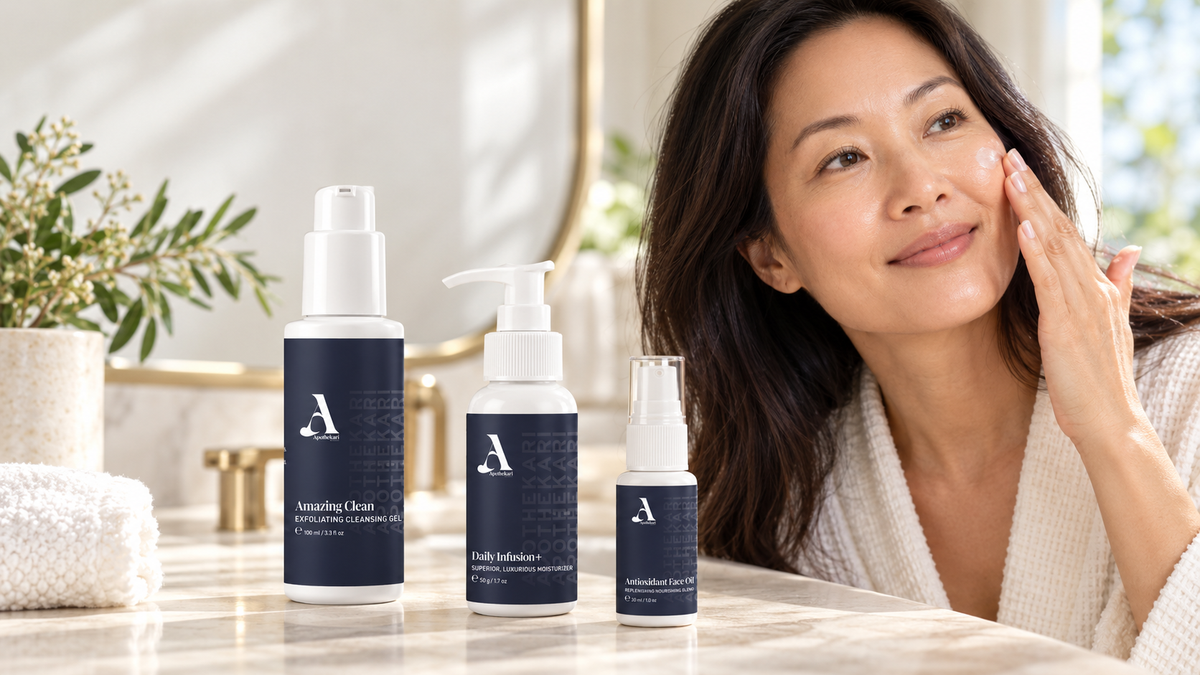
Applying skincare in the wrong order doesn't just waste product — it can genuinely block your actives from reaching the skin at all. The short answer is: layer from thinnest, most water-based texture to thickest, most oil-based texture, applying actives before moisturizer and oil before (or instead of) heavier creams, so each product can actually penetrate rather than sit on top of the last one.
Why Order Matters More Than People Think
Skincare products are absorbed based on molecular size and texture. A thin, water-based serum can penetrate skin that's already clean, but if you apply a heavy, oil-based moisturizer first, that same serum will struggle to get past it. The result: you paid for an active ingredient that's mostly sitting on the surface, doing very little.
The general rule is texture-based, not brand-based: thinnest to thickest, water-based to oil-based, treatment products before barrier-sealing products.
The Correct Order, Step by Step
Step 1: Cleanse. Start with a gentle cleanser to remove makeup, sunscreen, and daily buildup without stripping the skin. A cleanser that exfoliates lightly, like AHA-Mazing Clean Gel Cleanser, can double as your exfoliation step on the nights you use it.
Step 2: Treat with your thinnest, most targeted actives first. This is where vitamin C serums go in the morning, and where retinal or other treatment actives go at night. Apply to slightly damp skin, in a thin, even layer.
Step 3: Give actives a few minutes to absorb. This matters more than most people realize — layering a moisturizer over a still-wet active serum can dilute it before it's had a chance to penetrate.
Step 4: Moisturize. A moisturizer like Daily Infusion Moisturizer helps lock in the actives underneath and supports the skin barrier, which is especially important on nights you're using a retinoid.
Step 5: Seal with an oil, if needed. Facial oils, like Marula Face Oil, go last because their larger molecular structure isn't meant to absorb quickly — it's meant to sit on top and slow water loss. Applying an oil before your serums would block them from reaching the skin.
Step 6 (AM only): Sunscreen, always last. Sunscreen needs to sit on top of everything else to form an even, effective barrier against UV rays. This step never gets skipped, regardless of how many other products came before it.
What About Multiple Serums?
If you're using more than one treatment product — say, vitamin C and a hydrating serum — apply the thinnest, most watery formula first, and the thicker one after. When in doubt, apply the product you most need to reach the skin directly (like an active) before the one meant to hydrate or soothe.
What Happens If You Get the Order Wrong?
Nothing dangerous happens immediately, but the products simply won't work as intended. Applying a moisturizer before a serum is the most common mistake, and it quietly reduces how much of your active ingredient actually reaches the skin — which is often why people assume a product "isn't working" when the real issue is sequencing.
FAQ
Does skincare order really make a difference, or is it overthinking it? It makes a real difference. Because absorption depends on texture and molecular size, applying products out of order can significantly reduce how much of an active ingredient reaches the skin, even if every product itself is high quality.
Should I apply moisturizer before or after retinal serum? After. Apply retinal to clean, dry skin first, let it absorb for a few minutes, then follow with moisturizer to help support the barrier and reduce the chance of irritation.
Where does facial oil go in a skincare routine — first or last? Last, after moisturizer. Facial oils have a larger molecular structure that's designed to sit on the surface and slow water loss, so applying it first would block thinner serums and creams from being absorbed.
Can I skip moisturizer if I'm already using a face oil? It depends on your skin. Oil alone doesn't add water to the skin — it seals in moisture already there. If your skin tends toward dryness, using both a hydrating moisturizer and an oil on top gives more complete coverage than oil alone.
Ready to build out each step? Start with Peptides 101: What They Actually Do for Aging Skin or explore the full routine at apothekari.com.


