

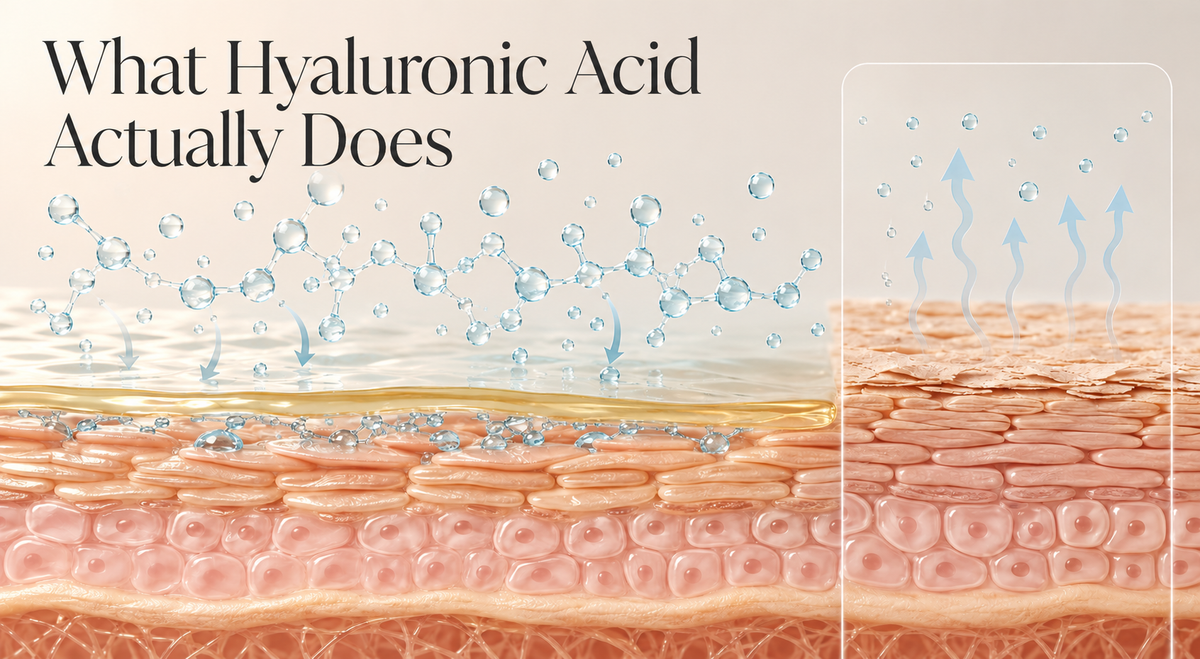
Hyaluronic acid gets marketed as a hydration miracle, but applied the wrong way, it can actually leave skin drier than before. The short answer is: hyaluronic acid is a humectant, not a moisturizer — it draws water toward itself from either the air or the layers beneath it, which means it only works as intended when there's moisture nearby for it to pull from.
What Hyaluronic Acid Actually Does
Hyaluronic acid is a naturally occurring molecule in skin that can hold up to 1,000 times its weight in water. In skincare, it functions as a humectant: an ingredient that attracts and binds water molecules, rather than supplying oil or sealing moisture in the way a traditional moisturizer does.
This is an important distinction. A moisturizer with occlusive or emollient ingredients (like oils or ceramides) creates a barrier that slows water loss. Hyaluronic acid does something different — it pulls water toward the skin's surface from whatever source is available.
Why It Can Backfire in Dry Climates
Here's the catch that rarely makes it onto the label: if the air around you is dry — as it commonly is once heating season starts — hyaluronic acid applied alone can pull moisture from the deeper layers of your skin instead of the atmosphere, since that's the more available source of water. The result is skin that ends up more dehydrated than before you applied it.
This is why hyaluronic acid is most effective when used in one of two ways: in a humid environment, or layered underneath a moisturizer or oil that seals the moisture it's just attracted.
How to Actually Use It
Apply to damp skin. Hyaluronic acid works best when there's already water on the skin's surface for it to bind — right after cleansing or misting, before the skin has fully dried.
Always follow with a moisturizer. This is the step most people skip. A moisturizer like Daily Infusion Moisturizer applied on top locks in the water hyaluronic acid has just drawn to the surface, rather than letting it evaporate straight back out.
Consider your climate and the season. In low-humidity conditions — dry fall and winter air, heated indoor spaces — hyaluronic acid needs that sealing step even more than it does in summer.
Look for it paired with other actives. Hyaluronic acid is commonly formulated alongside vitamin C or peptides, since it can help offset the slightly drying effect some actives have on their own. Glow Getter 3 combines vitamin C with hydrating support for exactly this reason.
Molecular Weight Matters Too
Not all hyaluronic acid behaves the same way. High molecular weight hyaluronic acid sits on the skin's surface, providing a smoothing, plumping effect without penetrating deeply. Low molecular weight versions penetrate further into the skin, delivering hydration at a deeper level. Many formulas use a blend of both for surface and deeper hydration at once.
FAQ
Does hyaluronic acid moisturize skin, or is that a myth? It's a partial myth. Hyaluronic acid attracts and holds water — it doesn't supply oil or seal moisture the way a true moisturizer does. Used alone in a dry environment, it can occasionally pull water from the skin rather than adding it, which is why pairing it with a moisturizer matters.
Can hyaluronic acid make my skin more dehydrated? In very dry conditions, yes, if it's applied without a moisturizer on top to seal the water it draws in. This is more common in winter or heated indoor air than in humid climates.
Should I apply hyaluronic acid before or after moisturizer? Before. Apply hyaluronic acid to damp skin first, then follow with your moisturizer to lock in the moisture it has attracted.
Is hyaluronic acid safe to use every day? Yes. It's one of the gentler active ingredients in skincare and is generally well tolerated by all skin types, including sensitive and reactive skin, when used with a moisturizer.
For the ingredient that pairs with hyaluronic acid to support collagen production, read Peptides 101: What They Actually Do for Aging Skin.


