

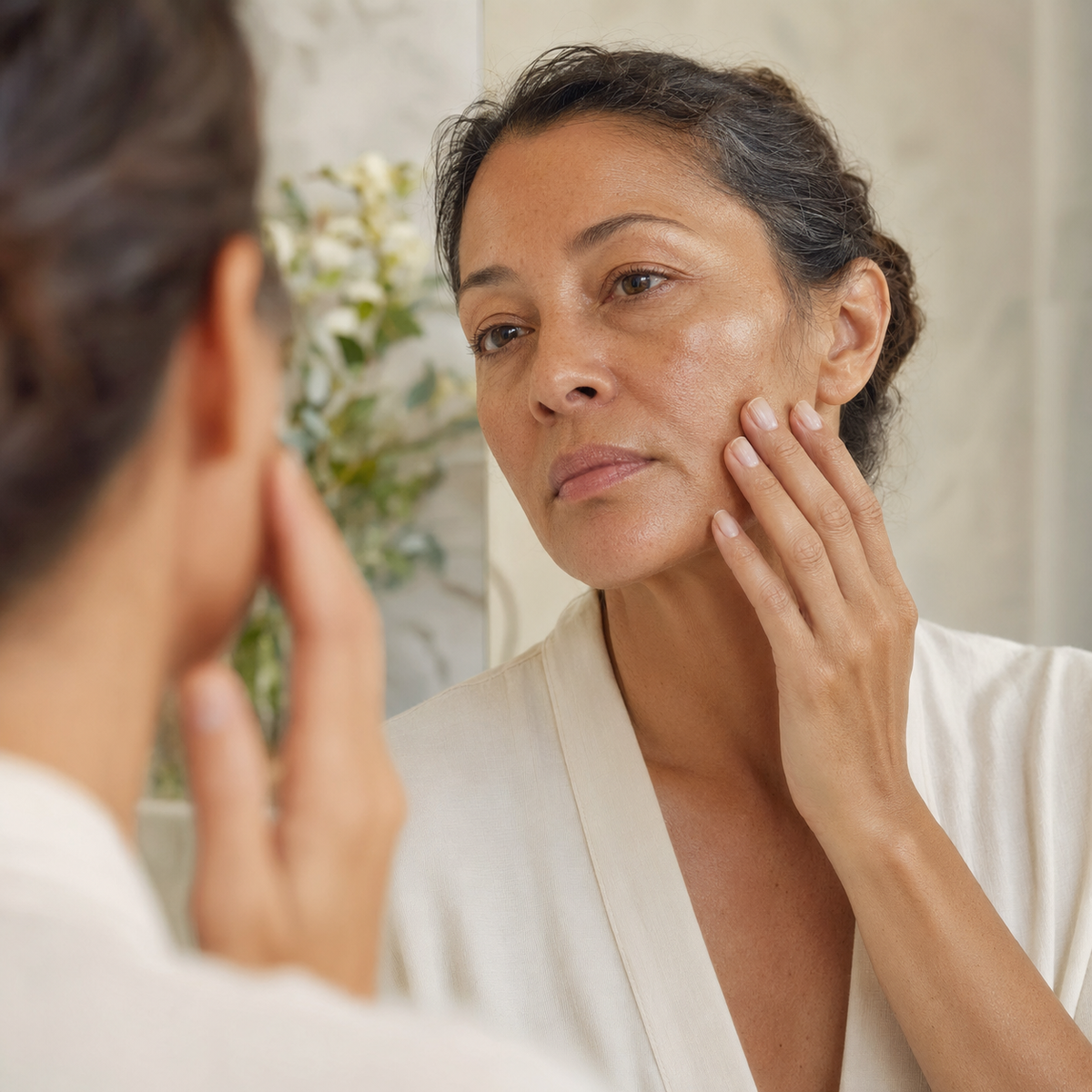
If your bathroom counter is filling up but your skin still isn't happy, you're not alone.
Here's the short answer: during perimenopause, a few good products used every day usually work better than a long routine. Changing skin is more easily bothered, so every extra step is another chance for irritation. Keeping things simple gives your skin room to settle and respond.
Why Can a Long Routine Backfire on Changing Skin?
As estrogen drops, your skin's protective outer layer gets weaker. Think of it as a brick wall with a few loose bricks. Things get through more easily, so skin reacts more quickly.
Every new product asks your skin to adjust. Layer on several at once, or switch often, and your skin never gets a chance to settle. That constant change can cause more redness and dryness, not less.
Why Does Sticking With It Matter More After 40?
Your skin renews itself more slowly as estrogen declines. That means it takes longer to show results from any product, good or bad.
A routine that worked in a few weeks in your 30s may need six to eight weeks now. This is one of the most common reasons good routines get dropped too early. They weren't failing. They just needed a little more time.
What Does a Simple Routine Look Like?
Simple doesn't mean doing less for your skin. It means every step earns its spot.
Morning:
- Cleanse.
- Apply a vitamin C serum. It helps protect skin from daily stress like sun and pollution, and helps skin look brighter.
- Moisturize.
- Finish with sunscreen.
Evening:
- Cleanse.
- Apply a vitamin A serum, like retinal. It helps your skin renew itself overnight while you rest.
- Moisturize.
A few times a week: Exfoliate gently, not every day. A mild exfoliating cleanser like our AHA-Mazing Clean Gel Cleanser helps clear away dull buildup without overdoing it.
That's it. No extra toners, essences or layered treatments all competing for attention.
Why Use One Serum in the Morning and One at Night?
Instead of piling several strong ingredients on at once, splitting them up lets each one do its own job.
- Vitamin C works best in the morning, before you head out into the day.
- Retinal works best at night, because it can make skin more sensitive to the sun.
Two serums, two times of day, no juggling.
Frequently Asked Questions
Why does skin take longer to show results after 40?
As estrogen drops, your skin renews itself more slowly. That means it takes longer to respond to any product. A routine that showed results in a few weeks in your 30s may need six to eight weeks now, so give new products time before deciding they don't work.
Is it better to use fewer products on perimenopause skin?
Usually, yes. During perimenopause, your skin's protective layer gets weaker, so skin reacts more easily. Every new product is something else it has to adjust to. A short, steady routine tends to cause less irritation and give more reliable results than a long one.
Should I use vitamin C and retinal at the same time?
It's best to split them up. Use vitamin C in the morning, before you head out into the day. Use retinal at night, since it can make skin more sensitive to the sun. That way each one can do its job without getting in the other's way.
How long should I try a new routine before judging it?
Give it at least six to eight weeks if you're in your 40s or beyond. Skin renews itself more slowly at this stage, so visible changes take longer to appear than they did in your 20s or 30s. Patience really pays off here.
A Simple Place to Start
If your counter has more products than your skin really needs, it might be time to simplify instead of adding more.
Meet the Radiant Skin Set. It pairs Glow Getter 3, our triple vitamin C serum for mornings, with Advanced+ Renewal, our retinal serum for nights. Two serums, one easy routine for changing skin.


