

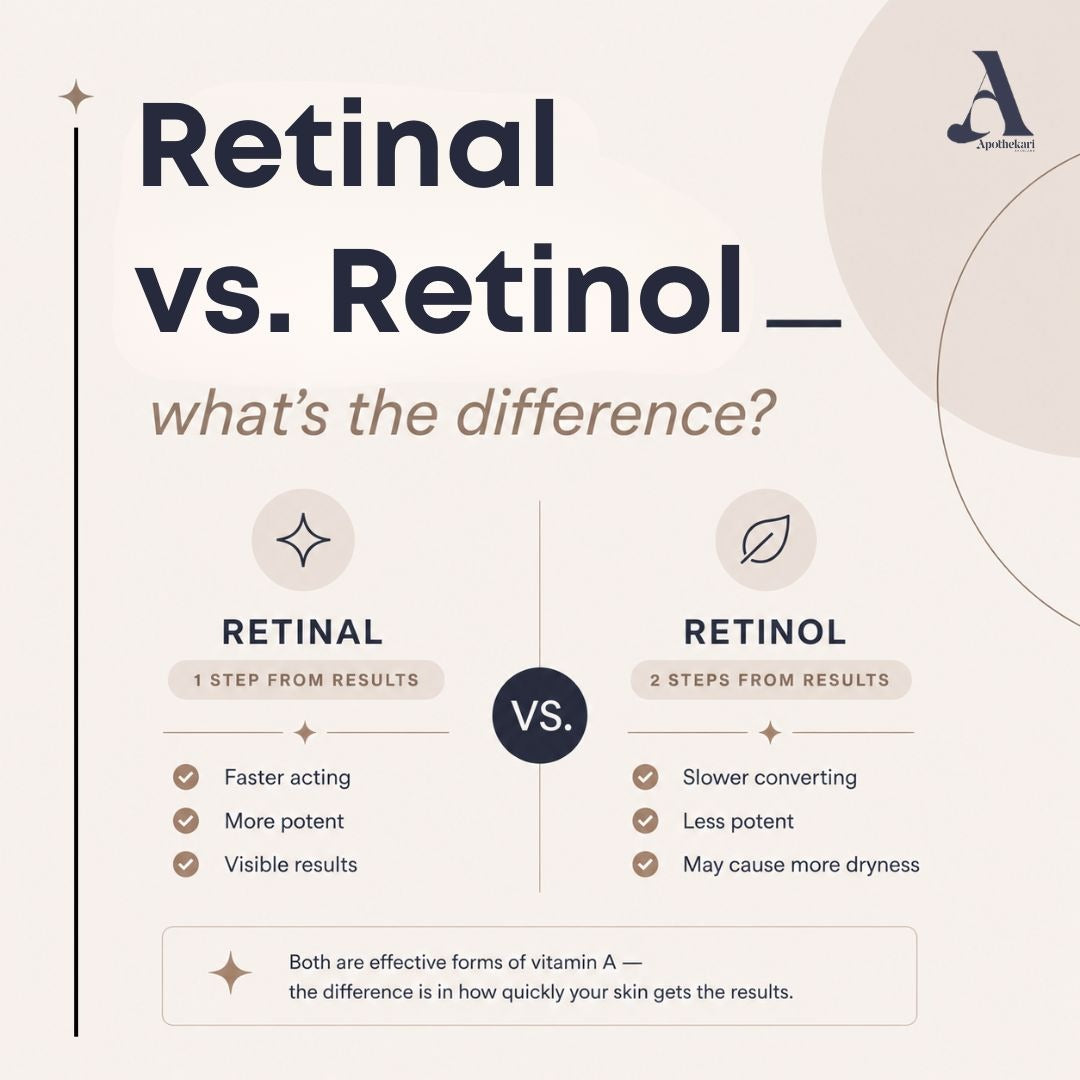
Retinol has been the go-to vitamin A ingredient for years, but it's not the only option — and it's not the fastest. The short answer: retinal (retinaldehyde) needs one conversion step to become active in skin, while retinol needs two. That single difference is why retinal tends to work faster and with less irritation than retinol.
Why Does Retinal Work Faster Than Retinol?
Both retinal and retinol are forms of vitamin A, but your skin has to do more work to use retinol. Retinol needs to convert twice before it becomes active — first to retinaldehyde, then to retinoic acid, the form your skin cells actually respond to. Retinal (retinaldehyde) skips the first step, since it's already one conversion away from active retinoic acid.
That's the whole mechanism behind retinal's reputation for faster results. It's not a marketing claim — it's chemistry. The fewer conversion steps an ingredient needs, the sooner skin can put it to use.
Does More Potent Mean More Irritating?
Not necessarily, and this is where retinal breaks the usual pattern. Because retinal converts more efficiently, formulators can use it at lower concentrations than retinol while still achieving a stronger effect. Lower concentration, delivered more efficiently, tends to mean less of the dryness, flaking, and redness people associate with retinoids — which matters most for skin that's become more reactive with age or hormonal shifts.
This is why retinal has earned a reputation as a middle ground: more effective than over-the-counter retinol, but gentler than prescription-strength retinoids like tretinoin.
What Should You Look for in a Retinal Serum?
A well-formulated retinal serum should pair the active ingredient with supporting ingredients that offset dryness and irritation, since even a gentler retinoid can be drying on its own. Niacinamide helps support the skin barrier, while brightening agents like phenylethyl resorcinol can address uneven tone at the same time.
Our Advanced+ Renewal serum combines retinal (via IconicA®) with niacinamide and phenylethyl resorcinol — so the formula delivers faster-acting vitamin A while also brightening tone and supporting the skin barrier. It's formulated to be the gentlest option in the retinoid family, without giving up dermatologist-grade results. Meet Advanced+ Renewal.
Can You Switch From Retinol to Retinal Right Away?
Yes — you don't need a "detox" period between the two. Since retinal works through the same pathway as retinol, just more efficiently, your skin doesn't need to reset before switching. Ease in with retinal 2-3 nights a week for the first couple of weeks, the same way you would when introducing any new active, then build up frequency from there.
Frequently Asked Questions
What's the difference between retinal and retinol? Retinal (retinaldehyde) needs only one conversion step to become active retinoic acid in skin, while retinol needs two. This makes retinal faster-acting and, at comparable concentrations, more potent than retinol.
Is retinal safe for sensitive or mature skin? Retinal is generally considered gentler than prescription retinoids because it can achieve strong results at lower concentrations. It's still an active ingredient, so easing in gradually and pairing it with barrier-supporting ingredients like niacinamide is recommended.
Can I switch from retinol to retinal without irritation? Yes. There's no need to pause or "detox" between the two. Introduce retinal 2-3 nights a week for the first couple of weeks, then increase frequency as your skin adjusts, just as you would with any new active ingredient.
Do I still need SPF if I'm using retinal? Yes, always. Retinoids increase skin's sensitivity to UV exposure, so daily SPF is essential whenever vitamin A is part of your routine — regardless of whether it's retinal, retinol, or a prescription form.
The Bottom Line
Retinal and retinol are both effective forms of vitamin A, but the difference comes down to how much work your skin has to do to activate them. Retinal's single conversion step means faster results, and its efficiency at lower concentrations means less of the irritation retinoids are known for — making it a strong option for skin that's become more reactive with age or hormonal changes.
Pair Advanced+ Renewal with a hydrating moisturizer like Daily Infusion Moisturizer to support your skin barrier while you build up retinal use.


