

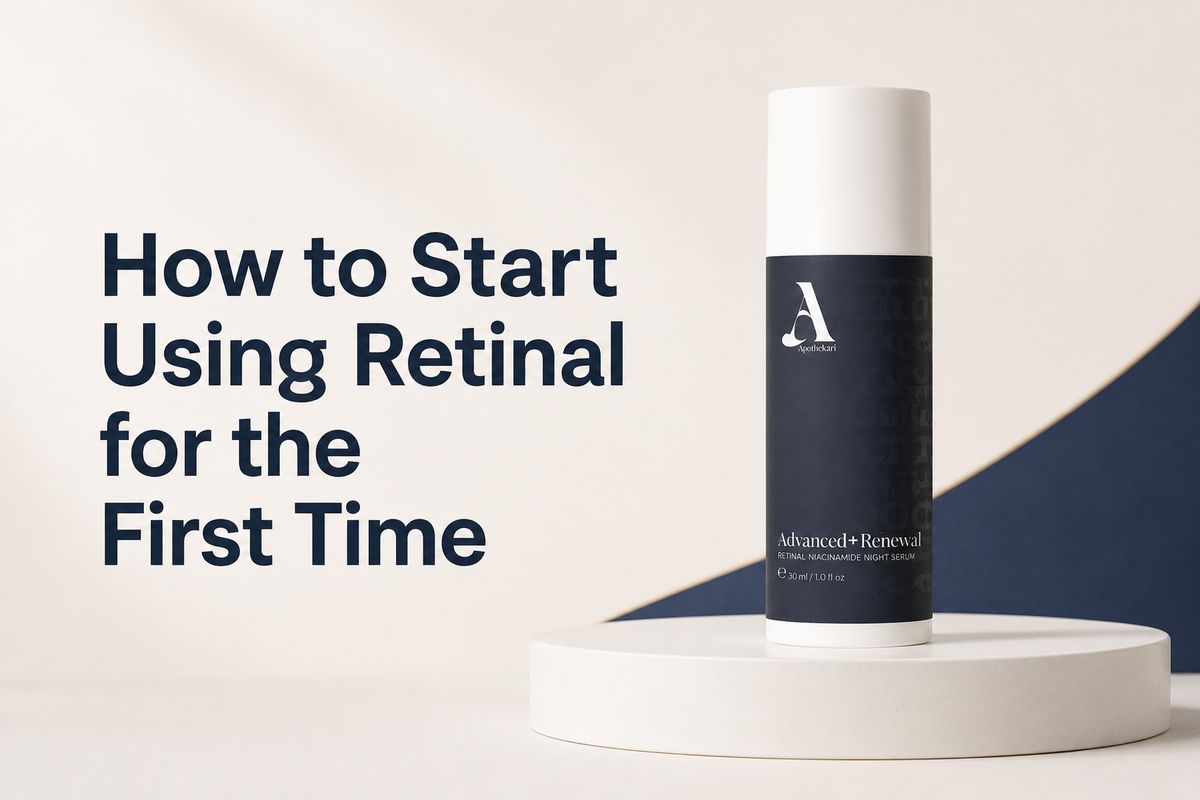
Starting a retinoid for the first time doesn't have to mean a rough few weeks of redness and flaking. The short answer: introduce retinal two to three nights a week, apply it to fully dry skin, buffer with moisturizer if you're sensitive, and commit to daily SPF the next morning. Build up to nightly use gradually over four to eight weeks rather than jumping straight in.
Why Does Introduction Speed Matter So Much?
Retinal works by speeding up how quickly skin cells turn over and signaling collagen production underneath the surface. That's exactly what makes it effective, and it's also exactly why going too fast causes problems. Skin that isn't used to accelerated turnover can respond with redness, flaking, tightness, or small breakouts, a temporary adjustment period sometimes called "retinization."
This isn't a sign the product is wrong for you. It's a sign your skin needs time to adapt to a new instruction. Most of the irritation people associate with starting a retinoid comes from going too fast, not from the ingredient itself being a poor fit. Skin that's already more reactive, whether from age, hormonal changes, or a compromised barrier, needs an even more gradual introduction than skin that's tolerated actives well in the past.
What Does a First-Time Retinal Routine Actually Look Like?
Start two to three nights a week. Resist the urge to use it nightly right away, even if the label says you can. Give your skin several non-retinal nights between applications for the first two to three weeks so it has time to recover and adjust between doses.
Apply to fully dry skin. Wait at least ten to fifteen minutes after cleansing before applying retinal. Damp skin absorbs actives more readily, which sounds like a good thing but actually increases irritation risk with retinoids specifically.
Buffer with moisturizer if you're sensitive. If you know your skin reacts easily, apply a light layer of moisturizer first, then the retinal on top, or mix a small amount of moisturizer directly with the serum in your palm. This slightly dilutes the delivery and softens the initial adjustment period without meaningfully reducing long-term results.
Follow with SPF the next morning, every time. Retinal increases skin's sensitivity to UV exposure. This isn't a "nice to have" during your first weeks of use, it's the single most important habit to pair with any retinoid, full stop.
Build up gradually over four to eight weeks. Once your skin tolerates two to three nights a week without redness or flaking, add a night. Continue increasing frequency slowly until you're using it nightly, if that's your goal, rather than treating any fixed weekly schedule as a requirement.
Hold off on stacking other actives at first. Skip AHA exfoliants or a high-strength vitamin C serum on the same night as retinal while your skin is still adjusting. Once you're tolerating nightly retinal comfortably, most people can reintroduce these on alternating nights or at a different time of day.
Advanced+ Renewal is formulated with stabilized retinaldehyde and niacinamide specifically to make this adjustment period more manageable, but the introduction pace above still matters regardless of which retinal product you're using.
Frequently Asked Questions
What if my skin gets red or flaky when I first start using retinal? Mild redness or flaking in the first two to three weeks is common and usually resolves as skin adjusts. Reduce frequency to once or twice a week, add a moisturizer buffer, and give it time before deciding the product isn't working. If irritation is severe or doesn't improve after a month, stop and reassess.
Can I use retinal and vitamin C in the same routine? Yes, but not necessarily at the same time. Vitamin C works best in the morning under sunscreen, while retinal is a nighttime step, so using them at opposite ends of the day is usually the simplest approach and avoids any risk of the two actives destabilizing each other.
How soon will I actually see results from retinal? Early signs like smoother texture often show up within three to four weeks. More visible changes, like improved firmness or fading of dark spots, typically take eight to twelve weeks of consistent use. Retinal rewards patience more than intensity, using it every single night from week one usually backfires rather than speeding things up.
Ready to start? Advanced+ Renewal was formulated to make this exact introduction period easier on skin that's tried retinoids before and didn't love the experience.
Related reading:
- Retinal vs. Retinol: What's the Real Difference? — the science behind why retinal tends to be more tolerable to introduce
- Why Bumpy Skin Texture Happens + The 2-Minute Solution — the same patience-over-speed principle applies to any new active, not just retinal


