

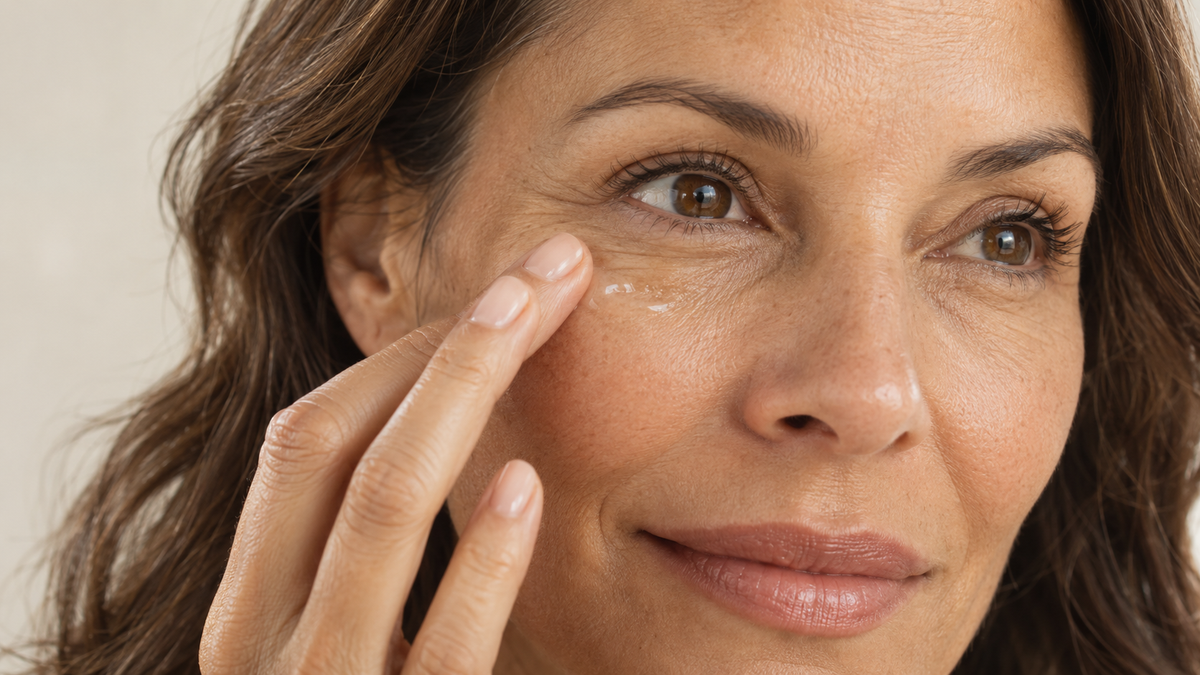
Peptides are one of the most common ingredients listed on skincare labels, and one of the least explained. The short answer is: peptides are short chains of amino acids that act as messengers, signaling skin cells to behave the way they did when collagen production was higher — which is why they're used in serums targeting fine lines, firmness, and the eye area specifically.
What Is a Peptide, Actually?
Proteins like collagen and elastin are built from long chains of amino acids. A peptide is a much shorter fragment of that same chain — small enough to penetrate the skin's surface, but structured enough to be recognized by skin cells as a signal rather than just a nutrient.
When applied topically, certain peptides bind to receptors on skin cells and trigger a specific response: produce more collagen, relax repetitive muscle contractions, or calm inflammation. The peptide itself isn't collagen — it's an instruction telling your skin to make more of its own.
Not All Peptides Do the Same Job
Peptides fall into a few functional categories, and understanding the difference matters more than the ingredient list alone:
- Signal peptides tell fibroblasts (the cells that produce collagen) to ramp up production. These are the peptides most associated with firmness and fine line improvement.
- Neurotransmitter-inhibiting peptides work similarly to a mild, topical alternative to injectables — they soften the muscle contractions behind expression lines, particularly around the eyes.
- Carrier peptides deliver trace minerals like copper to skin cells, supporting wound healing and collagen synthesis indirectly.
- Enzyme-inhibiting peptides slow down the breakdown of existing collagen, which matters just as much as encouraging new production.
A well-formulated serum often combines more than one type, since building collagen and slowing its breakdown are two different jobs.
Why the Eye Area Is Often Where Peptides Show Up First
The skin around the eyes is thinner, has fewer oil glands, and moves constantly with expression — which is exactly why it tends to show fine lines earlier than the rest of the face. It's also why peptides are frequently paired with encapsulated retinol in eye-specific formulas rather than a full-face serum: the combination targets both collagen support and the repetitive-motion lines that form from squinting and smiling over decades.
Active Eyes combines two peptides with encapsulated retinol for this reason — the peptides support firmness and soften the appearance of fine lines, while the encapsulated retinol delivers gradually to avoid irritating this more delicate skin.
How Long Before You See a Difference?
Peptides work by influencing cell behavior, not by delivering an instant plumping effect, so results build gradually. Most people notice a difference in texture and firmness after 8–12 weeks of consistent use — in line with how long it takes skin cells to complete a full renewal cycle.
FAQ
Do peptides actually work, or is it marketing? Peptides have real, studied mechanisms — they bind to specific receptors and trigger measurable responses like increased collagen synthesis. That said, results depend heavily on the specific peptide, its concentration, and formulation stability, so not all peptide products perform equally.
Can I use peptides with retinal or vitamin C? Yes. Peptides work well alongside both, since they operate through a different mechanism than retinoids or antioxidants. Many formulas, including eye serums, combine peptides with a gentle retinoid intentionally.
How long do peptides take to show results? Most people see visible improvement in firmness and fine lines after 8–12 weeks of consistent use, since peptides work by influencing collagen production over time rather than delivering an immediate effect.
Are peptides safe for sensitive or reactive skin? Generally yes. Peptides don't exfoliate or increase cell turnover the way acids and retinoids do, which makes them one of the gentler active categories — a useful option when skin can't yet tolerate stronger actives.
Curious how peptides fit into the eye area specifically? Read Why Your Eye Area Ages Faster Than the Rest of Your Face and meet Active Eyes.


