

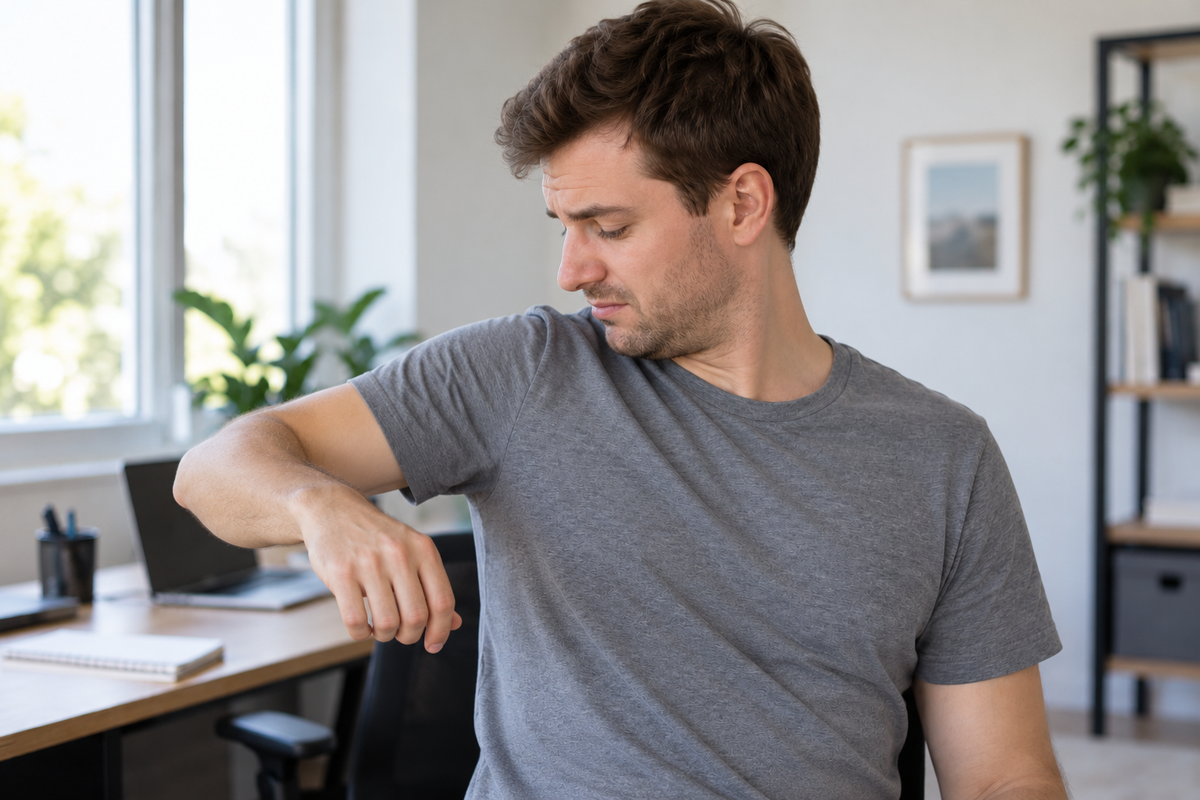
Ever finish a sweaty workout and smell completely fine, then catch a whiff of yourself after one stressful meeting? You're not imagining it, and you're not doing anything wrong.
Here's the short answer: sweat itself is almost odorless. Underarm odor comes from bacteria on your skin breaking sweat down into strong-smelling compounds. That's why the same body can smell different from day to day, and why the most effective deodorants target bacteria rather than sweat.
Why does sweat smell if sweat is odorless?
You have two main types of sweat glands. Eccrine glands cover most of your body and release a watery, salty sweat that cools you down. It has very little scent.
Your underarms also have apocrine glands. These release a thicker sweat that carries proteins and fats. On its own, it doesn't smell much either. But the bacteria living on your skin feed on it, and as they break it down they release the compounds we recognize as body odor.
So the smell isn't really "you." It's what happens when sweat meets the wrong bacteria and has time to sit.
Why does my body odor change from day to day?
Because the things that feed odor-causing bacteria change. Your scent can shift with:
- Stress. Stress sweat comes mostly from apocrine glands, the richer kind bacteria love. That's why a tense meeting can leave you smelling stronger than a spin class.
- Diet. Foods like garlic, onions, spices and alcohol can change the compounds in your sweat.
- Exercise. Mostly eccrine sweat, which is why a workout often smells milder than you'd expect.
- The weather. Heat and humidity keep skin warm and damp, the conditions bacteria thrive in.
The reason this matters for women over 40 is hormones. During perimenopause and menopause, shifting hormones can bring hot flashes, night sweats and more stress-related sweating. Many women notice their usual deodorant suddenly stops keeping up. Your body hasn't failed you. The conditions under your arms have simply changed.
How do most deodorants handle odor?
Most deodorants take one of two routes:
- Blocking sweat with aluminum. Antiperspirants plug your sweat ducts so less sweat reaches the surface.
- Covering the smell with heavy fragrance. The scent masks odor until it wears off, then the smell comes back.
Neither one deals with the bacteria that create the odor in the first place. Many "natural" deodorants rely on baking soda instead, which can irritate sensitive underarm skin.
What actually stops underarm odor?
The most direct approach is to make your underarms a less welcoming place for odor-causing bacteria, so the smell never gets a chance to form.
That's the route Apothekari's natural deodorant sprays take. Each spray uses three hardworking ingredients, Saccharomyces ferment, glycolic acid and ethylhexylglycerin, to fight odor three ways:
- Breaks down sweat before bacteria can turn it into odor.
- Makes skin less hospitable to odor-causing bacteria. Glycolic acid gently lowers skin pH, and odor-causing bacteria don't like a more acidic environment, so they can't take hold.
- Supports the good bacteria already living on your skin, which helps keep the odor-causing kind in check.
And just as important is what's left out. Every spray is free from aluminum, baking soda, parabens, phthalates, synthetic colourants and synthetic fragrances, and is never tested on animals.
How do you use a spray deodorant?
One spritz on clean, dry underarms each morning is all it takes. Let it dry for a few seconds before dressing. Because the spray goes on light, there's no residue, no white marks and no heavy perfume.
Meet the lineup
If you're looking for a natural deodorant that goes after the cause of odor, not just the smell, meet our spray trio. Same odor-fighting formula, three scents:
- Barely There: citrus bergamot, light and fresh.
- Tranquil Moment: calming lavender.
- Morning Bliss: sweet orange and rosemary.
Can't decide? Try them all in a set and keep a scent for every mood.
Frequently Asked Questions About Natural Deodorant
Is sweat what makes you smell?
No. Fresh sweat is almost odorless. Underarm odor forms when bacteria on your skin break down the proteins and fats in apocrine sweat, releasing strong-smelling compounds. That's why the most effective way to stop odor is to make your underarms less welcoming to those bacteria, rather than simply blocking sweat or covering the smell with fragrance.
Why do I smell worse when I'm stressed than after a workout?
Stress sweat comes mainly from apocrine glands, which release a richer sweat that odor-causing bacteria feed on. Workout sweat comes mostly from eccrine glands and is largely water and salt. So a tense meeting can leave you smelling stronger than an hour at the gym, even though you sweated far less.
Why has my body odor changed in my 40s?
Shifting hormones during perimenopause and menopause can bring hot flashes, night sweats and more stress-related sweating. More sweat, and a different mix of sweat, gives odor-causing bacteria more to work with. Many women find their usual deodorant stops keeping up, and a formula that targets bacteria works better than one that only adds fragrance.
Does natural deodorant stop you from sweating?
No. Natural deodorants don't contain aluminum, so they don't block sweat. They work on odor instead. Apothekari's sprays fight odor three ways: breaking down sweat before bacteria can use it, making skin less hospitable to odor-causing bacteria, and supporting the good bacteria already on your skin. You'll still sweat, without the smell.
Is a natural deodorant without baking soda better for sensitive skin?
For many people, yes. Baking soda is highly alkaline and can irritate underarm skin, causing redness or itching. Apothekari's sprays are baking-soda-free and aluminum-free, and use glycolic acid to keep skin pH slightly acidic, which helps discourage odor-causing bacteria without the sting.
With care,
Katherine (Founder) & The Apothekari Team


