

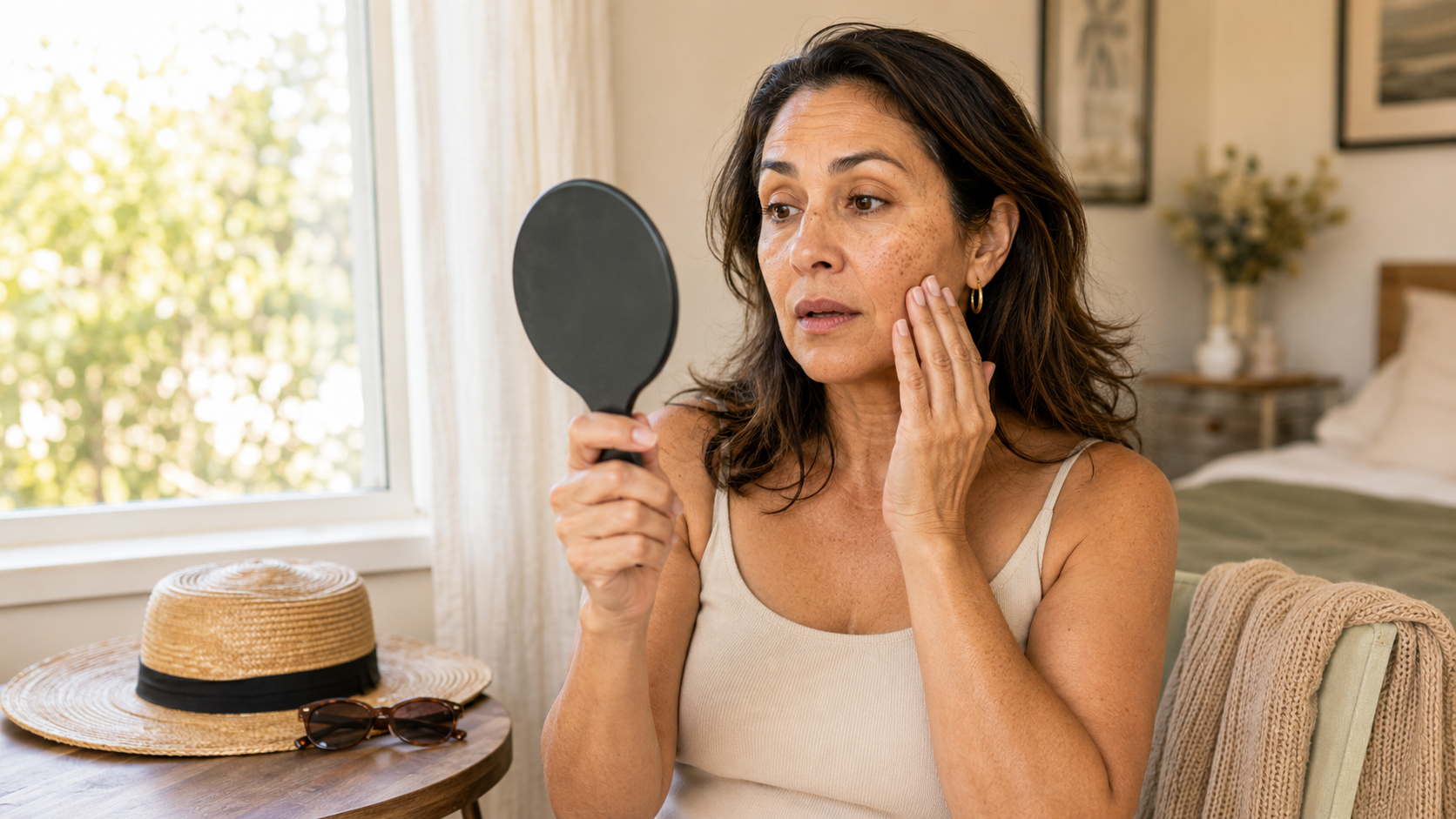
If your skin suddenly looks less even, a little rougher, or spottier than it did in June, that's not a coincidence — it's summer sun exposure showing up on a delay. The short answer: most UV damage isn't visible right away. Pigment changes and collagen breakdown build quietly over weeks and months, which is why late summer and early fall are often when the effects of the season finally surface.
Why Does Sun Damage Show Up Weeks or Months Later?
UV exposure triggers melanin production as a protective response, but visible pigment changes take time to reach the skin's surface. A day at the beach doesn't show up as a dark spot the next morning — it can take several weeks for that pigment to fully form and become noticeable, which is exactly why sunspots and uneven tone seem to "appear out of nowhere" in September.
Collagen breakdown works on an even slower timeline. UV rays generate free radicals that damage collagen and elastin fibers gradually, over repeated exposure. The cumulative effect, less firmness, finer texture, a slightly duller look, tends to become visible only after a season's worth of exposure has added up.
Skin cell turnover also slows with age, meaning damaged surface cells stick around longer instead of shedding on their own. So the sun damage from July is still sitting on the surface of your skin in September, simply because it hasn't had a chance to turn over yet.
None of this means the damage is permanent. It means fall is actually a smart, practical time to start addressing it, once peak sun intensity has passed and skin isn't fighting fresh exposure every day.
What Actually Helps Repair Summer Sun Damage?
Keep the antioxidant protection going. Free radical damage from summer sun exposure doesn't stop the moment you're out of the sun; oxidative stress continues to affect skin cells for some time afterward. A vitamin C serum like Glow Getter 3 helps neutralize ongoing free radical activity and supports a more even tone as pigment fades.
Bring in a retinoid to speed up turnover. Retinal encourages skin to shed damaged surface cells faster and stimulates collagen production, both of which directly counter what UV exposure just did. Advanced+ Renewal is formulated with retinaldehyde, which tends to be gentler than higher-strength retinoids while still delivering meaningful results. Because retinoids increase sun sensitivity, this is a nighttime step, and sunscreen the next morning isn't optional.
Clear away surface buildup gently. A gentle AHA cleanser helps remove the dull, uneven layer of cells sitting on top of skin, letting your other actives absorb better. Don't over-exfoliate here; once or twice a day cleansing with a gentle formula is enough.
Don't stop the sunscreen. This is the step people quietly drop once summer ends, but UV exposure doesn't stop just because the weather cools. Daily SPF is still the single most effective way to prevent this cycle from repeating next year.
Frequently Asked Questions
How do I know if this is sun damage or just normal skin aging? Sun damage tends to show up as flat or slightly raised brown spots, uneven tone, and rougher texture in areas that got the most exposure — face, chest, hands. Aging changes, like loss of firmness or fine lines, happen more uniformly across skin regardless of sun exposure, though the two often overlap and compound each other.
Can retinal actually fade sunspots that have already formed? Yes, though it takes time. Retinal speeds up cell turnover and helps break up excess pigment over roughly eight to twelve weeks of consistent use. Combined with a vitamin C serum and daily SPF, most people see visible fading, though very deep or long-standing spots may need longer or additional in-office treatment.
Is fall really the best time to start treating sun damage, or should I wait? Fall is a good window because peak UV intensity has usually passed and skin isn't actively fighting new exposure every day, which makes actives like retinal easier to introduce with less risk of increased sensitivity. There's no need to wait until winter, starting now gives your skin a head start before next summer.
If this summer left your skin looking less even than you'd like, Radiant Skin Set pairs Glow Getter 3 and Advanced+ Renewal, exactly the combination this reset calls for.
Related reading:
- Why Does Skin Start to Lose Its Radiance in Your 40s? — sun damage from earlier decades often surfaces later, this explains why
- Why Bumpy Skin Texture Happens + The 2-Minute Solution — on why over-exfoliating to "fix" summer texture faster can backfire


