

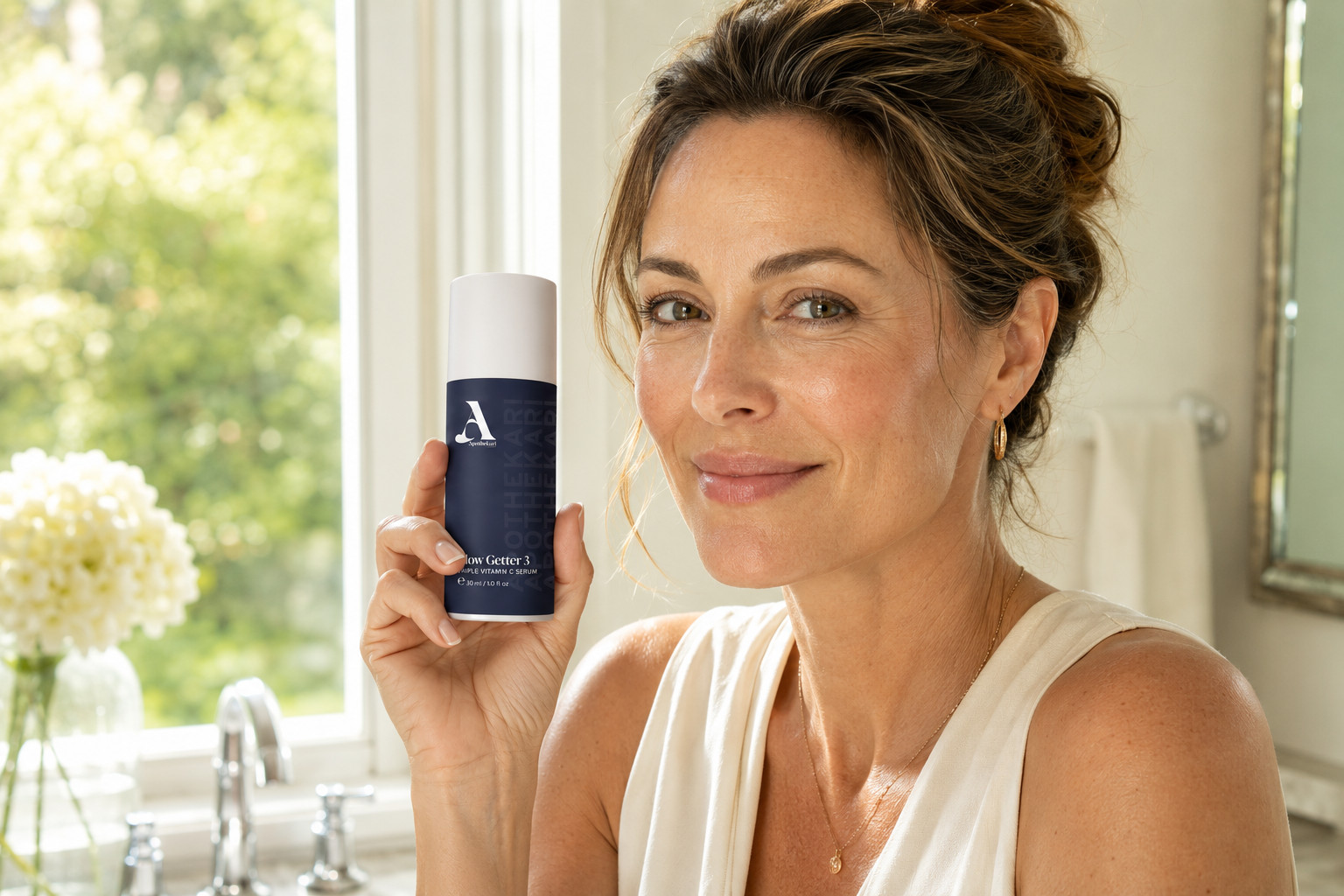
Vitamin C gets most of the attention in summer skincare conversations, and for good reason — but it's not designed to work entirely on its own.
Antioxidants function best as a network, not a solo act. A single antioxidant serum offers real protection, but layering complementary antioxidants together offers meaningfully more defense against the free radical damage that builds up over a summer of UV exposure.
Why Doesn't One Antioxidant Cover Everything?
Different antioxidants work in different parts of the skin, and they also support each other's stability and effectiveness.
Vitamin C is water-soluble, meaning it works primarily in the watery parts of skin tissue. Vitamin E is fat-soluble, meaning it protects the lipid structures and cell membranes that vitamin C can't reach on its own. Used together, they cover more ground than either one does alone — which is exactly why so many effective vitamin C serums include vitamin E in the same formula.
What Does the Research Actually Show About Antioxidant Combinations?
Antioxidant pairings have been studied specifically for their combined effect on UV protection, not just their individual benefits.
Research on combining vitamin C and vitamin E has shown measurably better protection against UV-induced skin damage than either ingredient used alone. Vitamin E also helps regenerate vitamin C after it's been used up neutralizing free radicals, effectively extending how long the antioxidant defense stays active throughout the day.
What Does a Well-Rounded Antioxidant Serum Actually Include?
A single-form vitamin C serum leans on just one ingredient to do the antioxidant work. A more complete formula spreads that job across several.
Multiple forms of vitamin C. Different forms of vitamin C absorb at different depths and rates, so combining them offers broader coverage than a single form alone.
Vitamin E alongside it. As a fat-soluble antioxidant, vitamin E protects cell membranes and helps stabilize vitamin C, extending its effectiveness.
Supporting antioxidants when possible. Ingredients like green tea extract or additional plant-based antioxidants can add further layers of free radical defense on top of the core vitamin C and E combination.
Do You Need to Layer Multiple Separate Products to Get This Benefit?
Not necessarily — some serums are formulated with several antioxidants already combined, which simplifies the layering without sacrificing the benefit.
Rather than applying a single-form vitamin C serum and then layering a separate vitamin E product on top, a formula that already combines multiple forms of vitamin C with vitamin E delivers much of this antioxidant network in one step. That's a meaningful difference from a basic single-ingredient vitamin C serum, even if both products are labeled "vitamin C serum" on the front of the bottle.
How Does This Fit Into a Summer Routine?
Antioxidant serums are designed to work underneath sunscreen, not instead of it.
Apply your antioxidant serum first thing in the morning, then follow with sunscreen as the final step. The serum neutralizes free radical damage that gets through despite protection, while sunscreen blocks the majority of UV rays before they reach the skin at all. Together, they cover more of the picture than either one does alone — which is the same principle behind layering multiple antioxidants within the serum step itself.
Is vitamin C alone enough antioxidant protection for summer?
It's a solid foundation, but research suggests combining vitamin C with vitamin E provides measurably better protection against UV-related damage than vitamin C used alone, since the two work in different parts of skin tissue.
Why is vitamin E often paired with vitamin C in serums?
Vitamin E is fat-soluble and protects lipid structures that water-soluble vitamin C can't reach, and it also helps regenerate vitamin C after it neutralizes free radicals, extending the serum's overall effectiveness.
Do you need separate vitamin C and vitamin E products?
Not necessarily. Many serums combine multiple forms of vitamin C with vitamin E in a single formula, which offers much of the antioxidant network benefit without requiring separate layered products.
Does antioxidant serum replace sunscreen?
No. Antioxidant serums work underneath sunscreen to neutralize free radical damage from UV exposure that gets through, while sunscreen blocks the majority of UV rays before they reach the skin. Both steps matter.
If your current vitamin C serum is a single-form formula working alone, adding vitamin E to the equation is one of the simplest upgrades to make before summer sun exposure peaks.
Glow Getter 3 combines three forms of vitamin C with vitamin E in one formula, built specifically around the idea that antioxidants work better as a network than a solo act.


